AI for Manufacturing
From defect detection and predictive maintenance to process optimization and procurement, AI helps manufacturers cut quality control costs, reduce downtime, and improve efficiency across the production line.
We can bring AI to any workflow, user, or department.
Whether you are running discrete manufacturing, process plants, or complex assembly operations, we help you turn production data into actionable insights — without disrupting safety, compliance, or the way your teams already work.
Quality & defect recognition
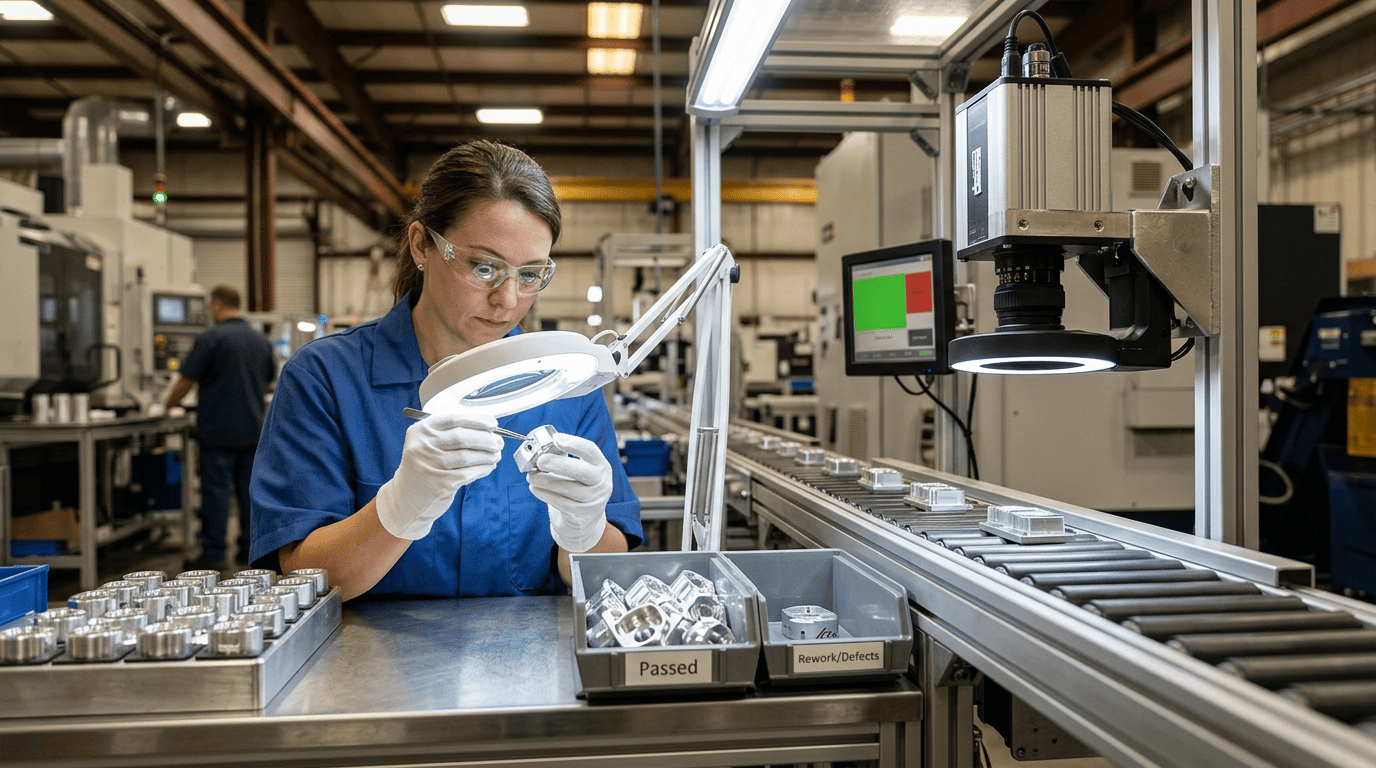
Automated visual inspection
AI automatically detects defects on the production line, reducing quality control costs and catching issues earlier. Computer vision systems analyze images of parts and assemblies in real time, identifying scratches, misalignments, missing components, surface defects, and other anomalies that might be overlooked by manual inspection — especially on fast‑moving or complex lines.
Instead of sampling a small percentage of output, you can move toward 100% inline inspection without slowing down production. This dramatically reduces the risk of shipping defective products and protects your brand in the eyes of customers and regulators.
Root cause analysis & parameter tuning
When combined with process data — machine settings, shift information, supplier lots — inspection insights help teams trace problems back to root causes and take corrective action quickly. AI can highlight which parameters, materials, or stations are statistically linked to specific defects.
Over time, this allows engineers and operators to tighten process windows, adjust recipes or work instructions, and standardize best practices across shifts and plants. Fewer defects reach downstream stages, rework drops, and customer returns decrease.
Production performance & maintenance
Optimization of production processes
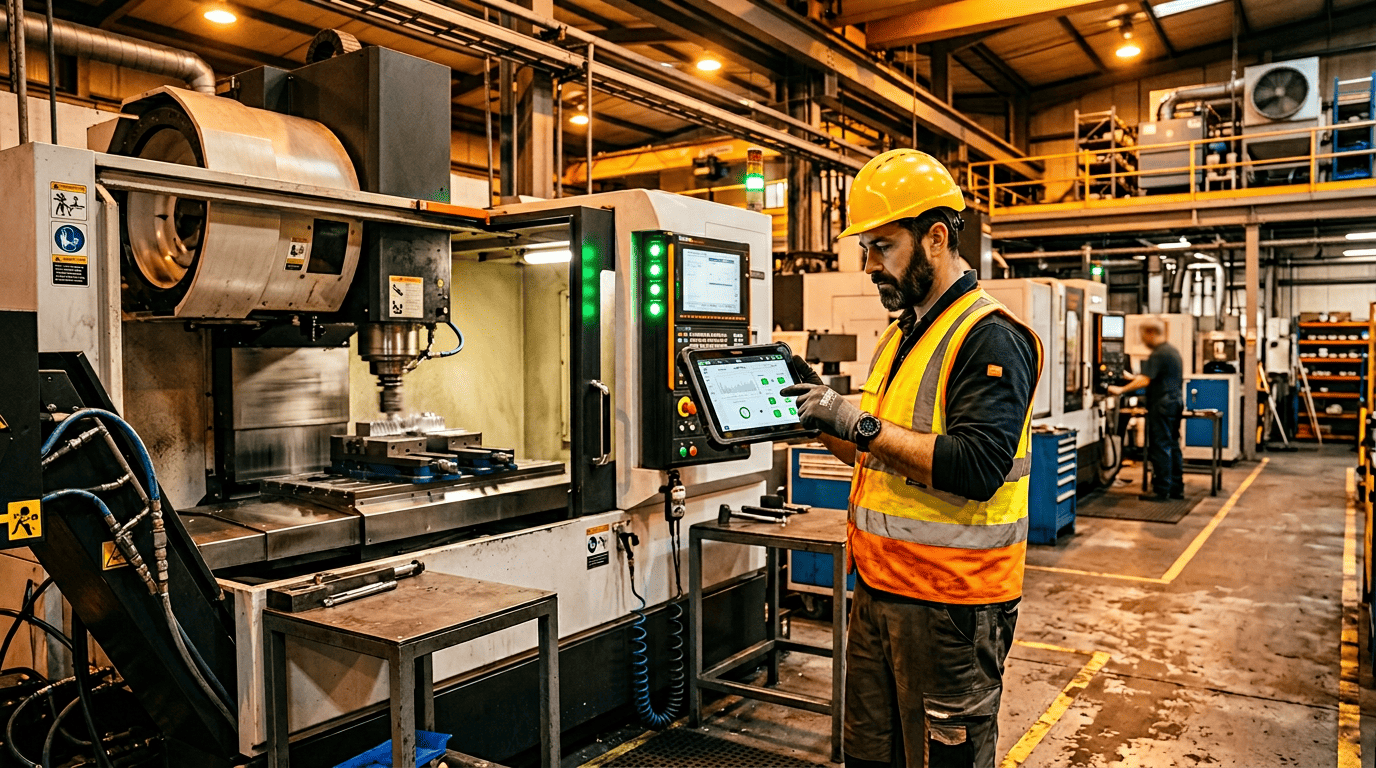
AI analyzes performance data from machines, lines, and plants to suggest ways to improve efficiency. Models can detect hidden bottlenecks, recommend optimal product mixes, and balance workloads across parallel lines so that assets are used to their full potential.
This gives operations and continuous‑improvement teams a live view of OEE drivers — availability, performance, and quality — and concrete recommendations on where to act next to unlock extra capacity without major CAPEX.
Predictive maintenance & asset reliability
AI models trained on sensor signals, equipment logs, and maintenance history can predict when machines are likely to fail before it happens. Vibration analysis, temperature trends, and abnormal energy consumption all become early‑warning indicators instead of noise.
Maintenance can then be scheduled at the right moment — not too early, not too late — reducing unplanned downtime, extending asset life, and smoothing the workload for maintenance teams.
Procurement & supply coordination
The same analytics can support procurement by forecasting raw material requirements and highlighting where alternative suppliers or order quantities would reduce risk or cost. Instead of relying purely on historical averages, purchasing decisions are informed by live demand, production plans, and supplier performance.
This creates a tighter loop between planning, execution, and continuous improvement across the factory network, reducing stockouts and excess inventory at the same time.
From single use case to plant‑wide rollout
Start focused, then scale
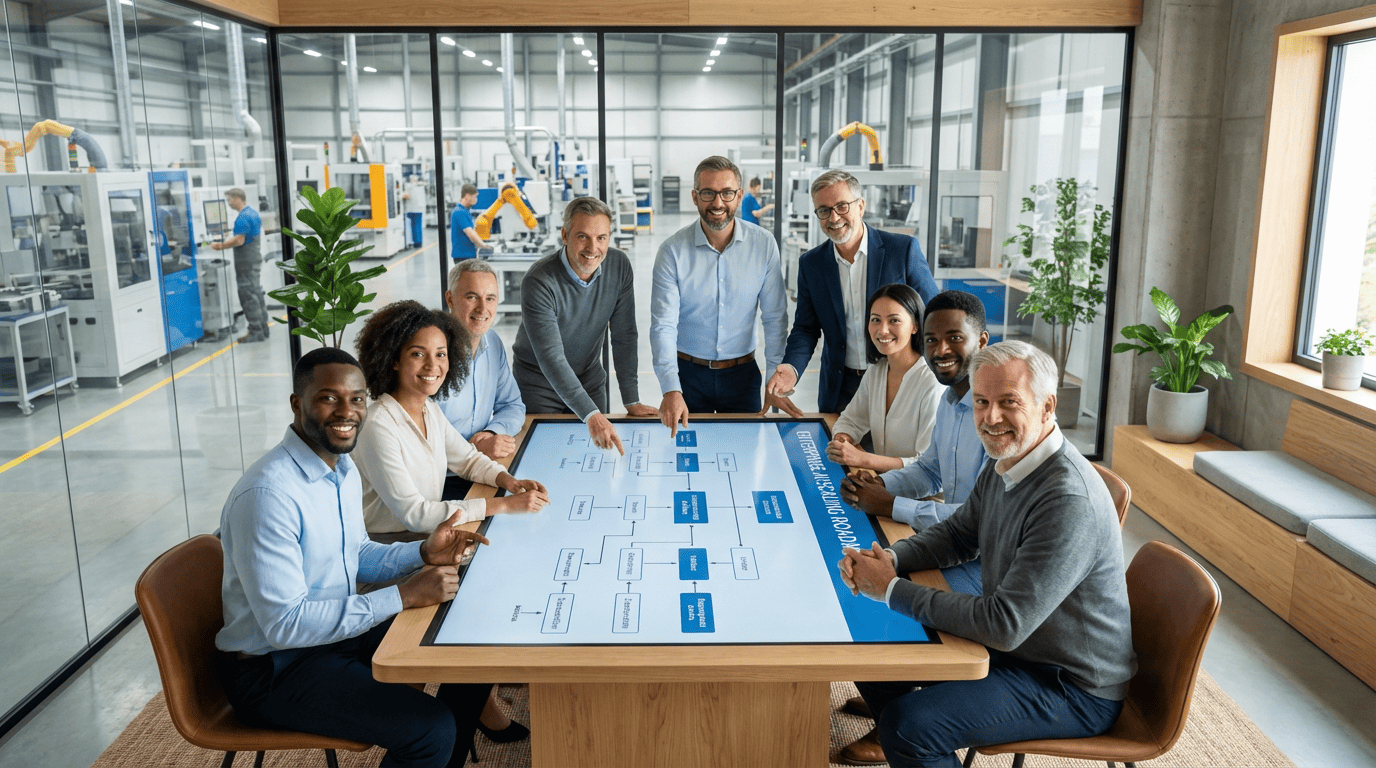
We typically start with a focused pilot around one or two high‑impact use cases — for example, a critical line with quality issues, or a bottleneck process limiting throughput. Once value is proven, the same data and models can be extended to adjacent lines, plants, and workflows.
Built for people on the shop floor
We can bring AI to any workflow, user, or department — but always in a form that fits how people already work. That means intuitive operator dashboards, alerts integrated into existing MES/SCADA systems, and clear explanations of why the model recommends a change.
Operators, engineers, planners, procurement, and leadership all see the same source of truth, but in the language and views that matter to them. This makes adoption smoother and ensures AI becomes a trusted part of daily decision‑making rather than a black box on the side.
Ready to explore AI for manufacturing?
Share your workflows and goals — we'll help you identify where AI can add the most value.
Talk to our team