AI‑driven capabilities for mission‑critical superiority
AI is becoming a strategic advantage for modern defense organizations. When applied correctly, it helps commanders see more, decide faster, and act with greater precision — across intelligence, autonomous systems, logistics, cybersecurity, and training. Below is how AI strengthens every layer of defense while staying aligned with operational doctrine, rules of engagement, and national security requirements.
We work with ministries of defense, armed forces, defense contractors, and dual‑use technology companies to turn fragmented data and legacy systems into integrated decision‑support tools. Our focus is on pragmatic, operational AI that can be trusted in mission environments — not experimental demos that are hard to deploy at scale.
From early‑warning systems and ISR analytics to autonomous platforms and training simulators, we design solutions around your doctrine, processes, and constraints, so AI augments your people and infrastructure instead of forcing you to change everything at once.
We also help defense organizations set up the right governance — model risk management, testing regimes, red‑teaming, and auditability — so that AI initiatives can pass internal review, satisfy external oversight, and remain aligned with ethical and legal frameworks over time.
Whether you are modernizing C2 systems, introducing AI‑enabled ISR workflows, or exploring manned‑unmanned teaming concepts, our role is to connect your strategic priorities with concrete, technically sound AI projects that deliver measurable capability gains, not just slideware.
Threat intelligence & cyber defense
Threat prediction & analysis
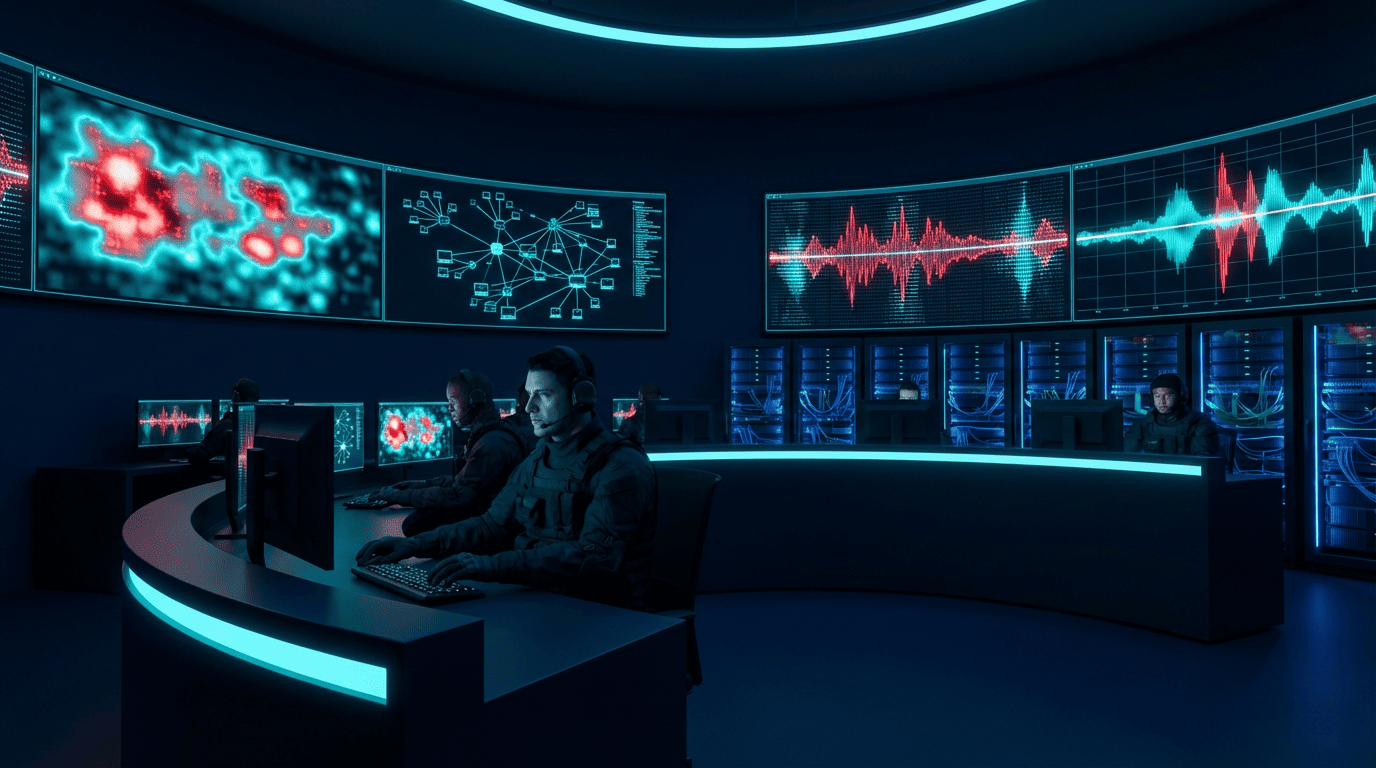
AI can analyze massive volumes of multi‑source data — signals intelligence, satellite imagery, sensor feeds, open‑source information, and historical reports — to predict potential threats before they materialize. Instead of relying only on manual analysis, machine learning models continuously scan for weak signals and correlations that a human team might miss.
This enables earlier detection of unusual troop movements, supply buildups, or changes in communication patterns that may indicate escalation. As a result, commanders receive prioritized risk assessments with explainable indicators, helping them allocate resources, prepare contingency plans, and de‑escalate situations in time.
Cybersecurity
Modern defense infrastructures are as digital as they are physical. AI analyzes networks to detect anomalies and potential cyberattacks in real time, going beyond static signatures or simple rules. Models learn what “normal” looks like for critical systems and immediately flag deviations — unusual login patterns, unexpected data flows, or suspicious process behavior.
Once a threat is identified, AI‑based systems can quickly respond to hacking attempts by isolating affected endpoints, blocking malicious traffic, and triggering automated playbooks. This shortens dwell time for attackers, limits lateral movement, and supports cyber teams with intelligent triage and prioritized incident queues.
Autonomous & unmanned systems
Autonomous combat drone systems
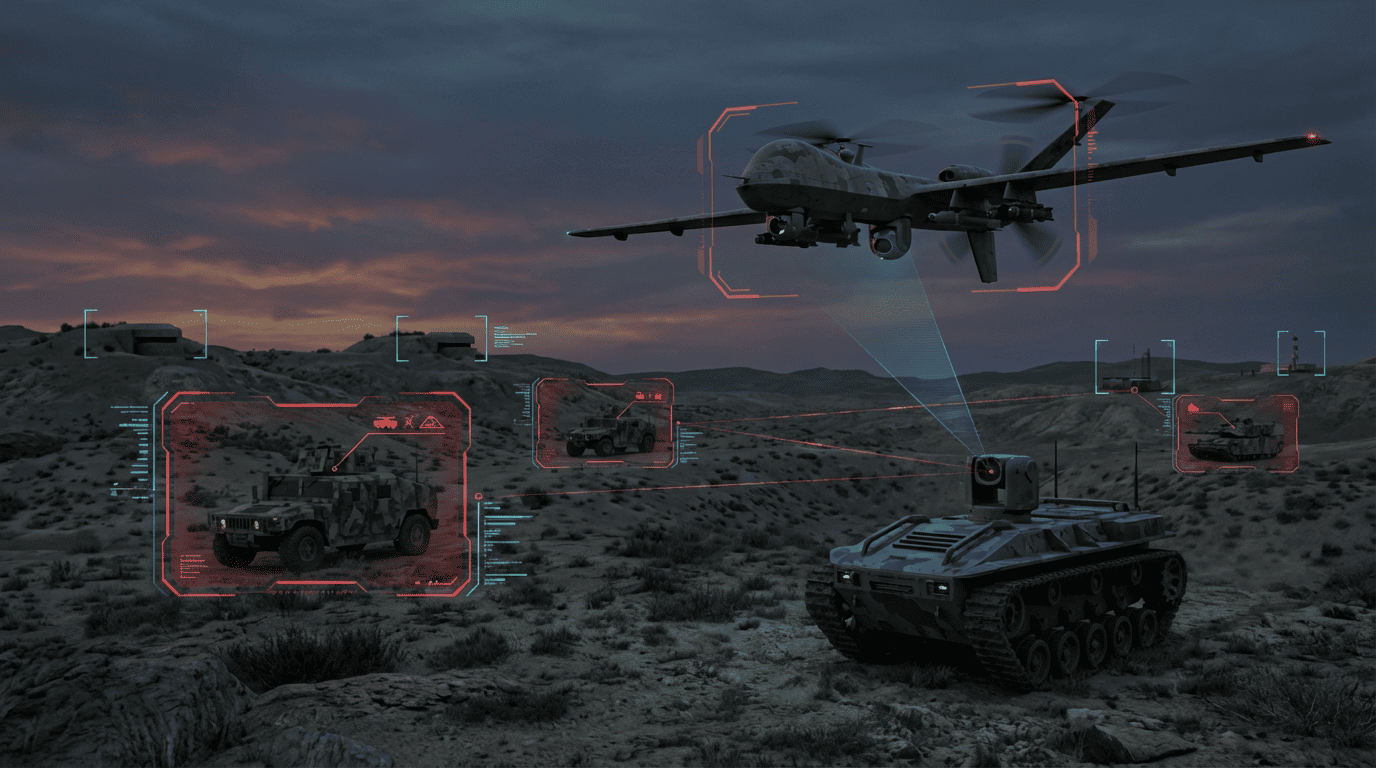
AI is being used to develop autonomous drones that can patrol areas, gather intelligence, and even carry out combat missions without constant human intervention. These systems can follow complex patrol routes, automatically track points of interest, and share real‑time video and telemetry with command centers.
Autonomous behaviors free operators from low‑level piloting tasks and allow them to supervise multiple platforms at once. At the same time, rules of engagement and human‑in‑the‑loop controls ensure that high‑consequence decisions remain under direct operator authority. This combination increases coverage, persistence, and responsiveness in the air domain.
Counter‑drone systems
AI can be used to develop counter‑drone systems that can detect, track, and neutralize enemy drones in real time. By analyzing radar, RF emissions, and visual signatures, these systems distinguish hostile UAVs from friendly or civilian platforms.
Once a threat is confirmed, AI supports the choice of optimal mitigation — jamming, spoofing, interception, or kinetic responses — based on rules of engagement and the surrounding environment. This layered defense against drones protects bases, convoys, and critical infrastructure from low‑cost, high‑impact aerial threats.
Object identification
AI systems can automatically recognize and classify objects in images using neural networks, for example to identify enemy vehicles, weapons, or infrastructure. Deployed on drones, satellites, or ground platforms, these models scan imagery in near real time, tagging and ranking objects by type and priority.
This speeds up target recognition, reduces the risk of human error, and allows analysts to focus on ambiguous or high‑impact cases. Combined with geolocation and temporal data, object identification builds a richer operational picture of adversary capabilities and movements.
Operations, logistics & situational awareness
Logistics optimization
In large‑scale operations, logistics often determines mission success. AI helps optimize supplies, routes, and resource management for military operations by continuously analyzing demand signals, terrain, weather conditions, and threat levels.
Machine learning models can recommend optimal convoy schedules, pre‑position equipment closer to likely hotspots, and dynamically reroute shipments when conditions change. This reduces response times, lowers fuel and maintenance costs, and decreases exposure of personnel and assets in contested environments — all while keeping inventory and readiness under tighter control.
Sensor data processing & analysis
In military technology, AI helps process information from various sensors, such as radar, infrared cameras, acoustic arrays, and EO/IR payloads. Instead of forcing analysts to manually sift through every frame or signal, AI pre‑filters and highlights relevant events.
This allows operators to quickly assess the situation, distinguish signal from noise, and focus on high‑value contacts. Fewer critical detections are missed, and situational awareness becomes more complete and timely — especially in environments where human attention is already overloaded by multiple feeds and simultaneous missions.
Underwater object detection
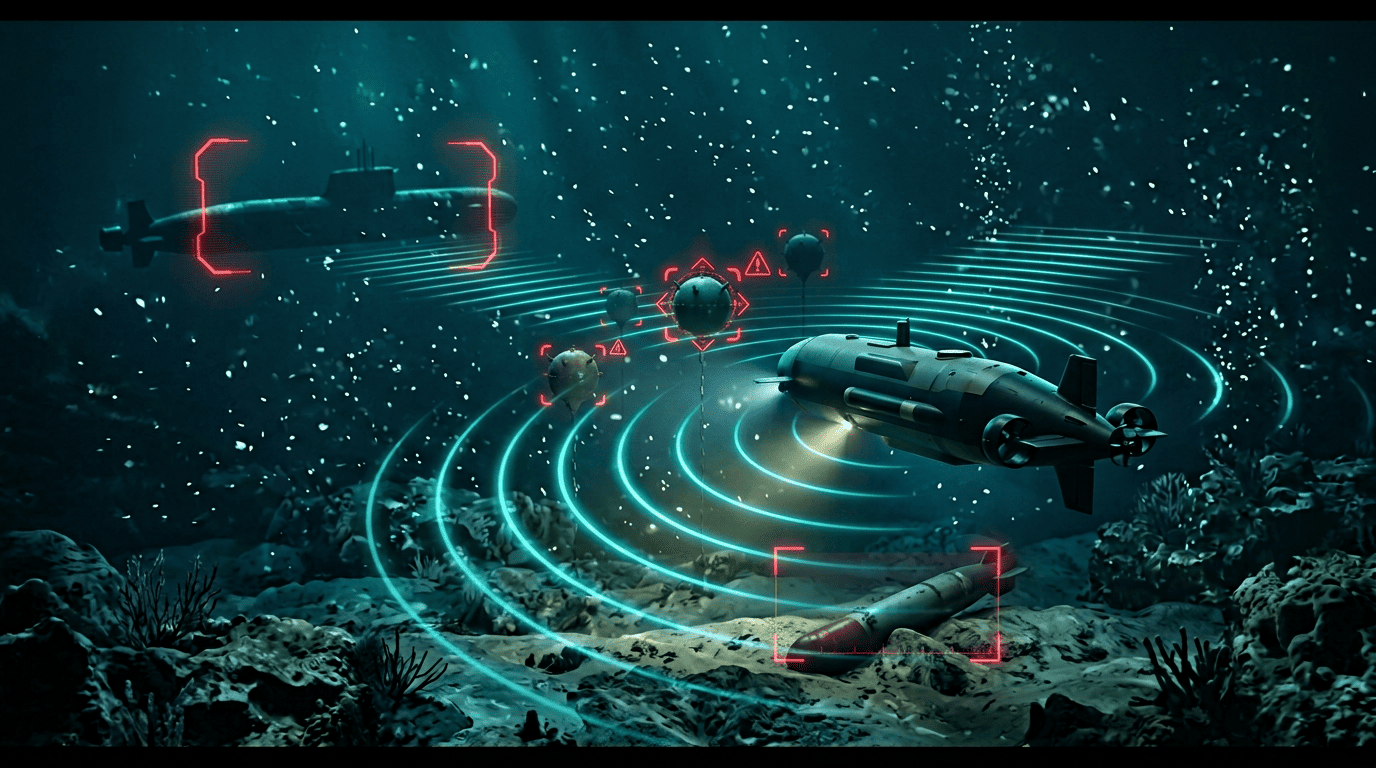
Under the surface, visibility is limited and traditional detection is challenging. AI helps analyze sonar data to detect underwater threats such as submarines, mines, and unmanned underwater vehicles. Models can differentiate between benign objects, marine life, and potential threats, reducing false positives that waste valuable time.
With continuous learning from historical sonar records and labeled events, detection accuracy improves over time. This enhances the protection of naval assets, sea lines of communication, and critical offshore infrastructure, while lowering the cognitive load on sonar operators.
Training, simulation & weapons systems
Combat simulation
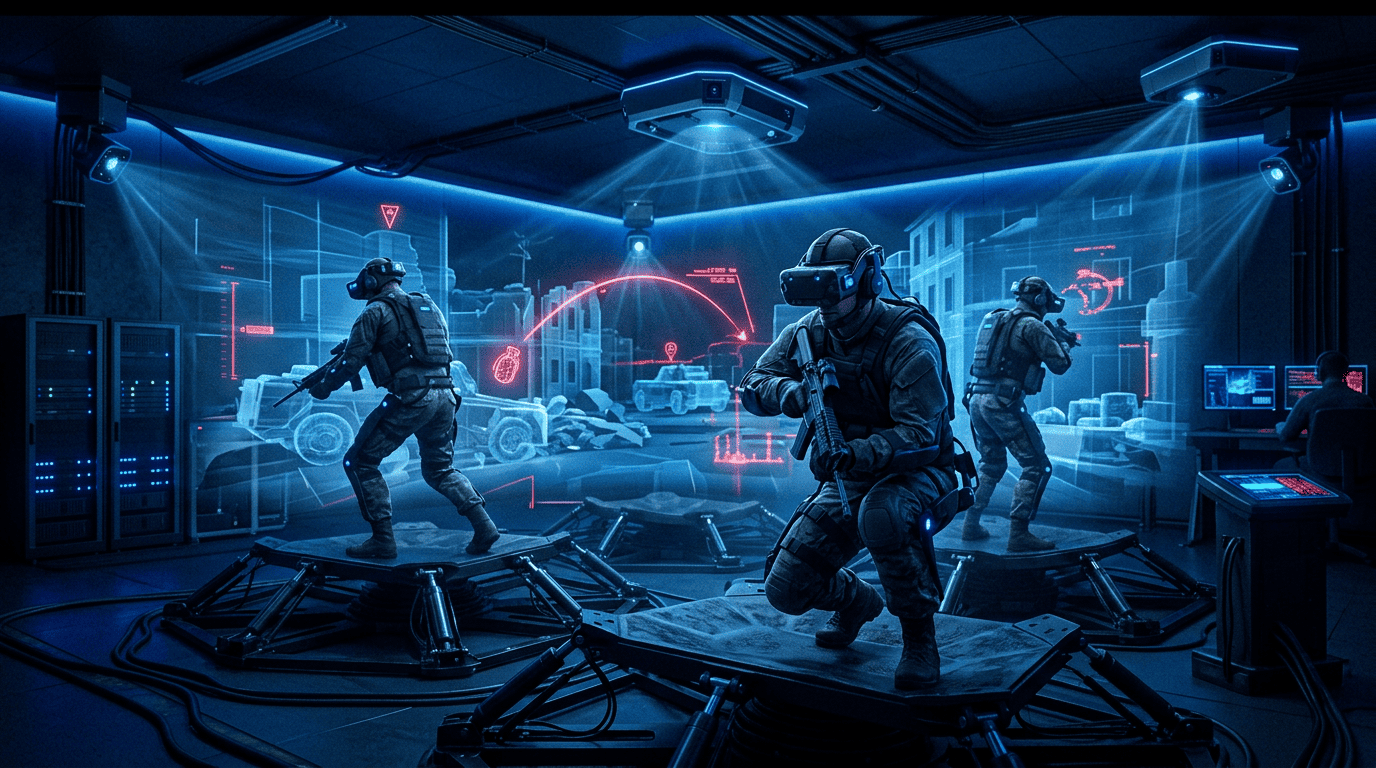
AI is used to create combat simulations that help the military plan operations, assess possible outcomes, and minimize losses. Instead of static war‑games, AI‑driven simulations react dynamically to tactics, weather, terrain, and adversary behavior, exposing commanders to a wide range of realistic scenarios.
Units can train on virtual battlefields that closely mirror real‑world conditions, testing doctrines and equipment configurations before they are deployed. This improves decision‑making under pressure, reveals weaknesses in plans, and supports evidence‑based adjustments to strategy and force structure.
Weapons control systems
AI can be used to improve weapon guidance accuracy and responsiveness. By fusing multiple sensor inputs and learning from past engagements, AI‑enhanced guidance systems can better estimate target trajectories, compensate for environmental conditions, and predict evasive maneuvers.
This leads to more effective weapons systems with automatic target and route selection, while still respecting defined constraints and safety rules. Commanders and operators retain authority over engagement decisions, but benefit from smarter aiming, faster lock‑on, and more efficient use of limited munitions.
Ready to explore AI for defense & military?
Share your focus — intelligence, autonomous systems, logistics, or defense systems — and we will help you identify where AI can add the most value while staying aligned with safety, governance, and policy.
Talk to our team