AI for Construction & Real Estate
Construction projects and real estate portfolios generate huge amounts of data — schedules, drawings, change orders, safety reports, market listings, and transaction histories. AI helps turn this data into practical tools that keep projects on time, sites safer, and investments better informed.
We work with general contractors, developers, asset owners, and real estate teams to apply AI to project planning, risk management, field safety, market analysis, and sales processes. The goal is not to replace your project managers or brokers, but to give them clearer visibility, fewer surprises, and smarter recommendations in the moments that matter.
Whether you build infrastructure, commercial buildings, or residential developments — or operate and trade properties at scale — AI can connect information scattered across systems and documents, so your teams spend less time searching and more time executing.
Construction: smarter project planning & scheduling
Project planning & risk analysis
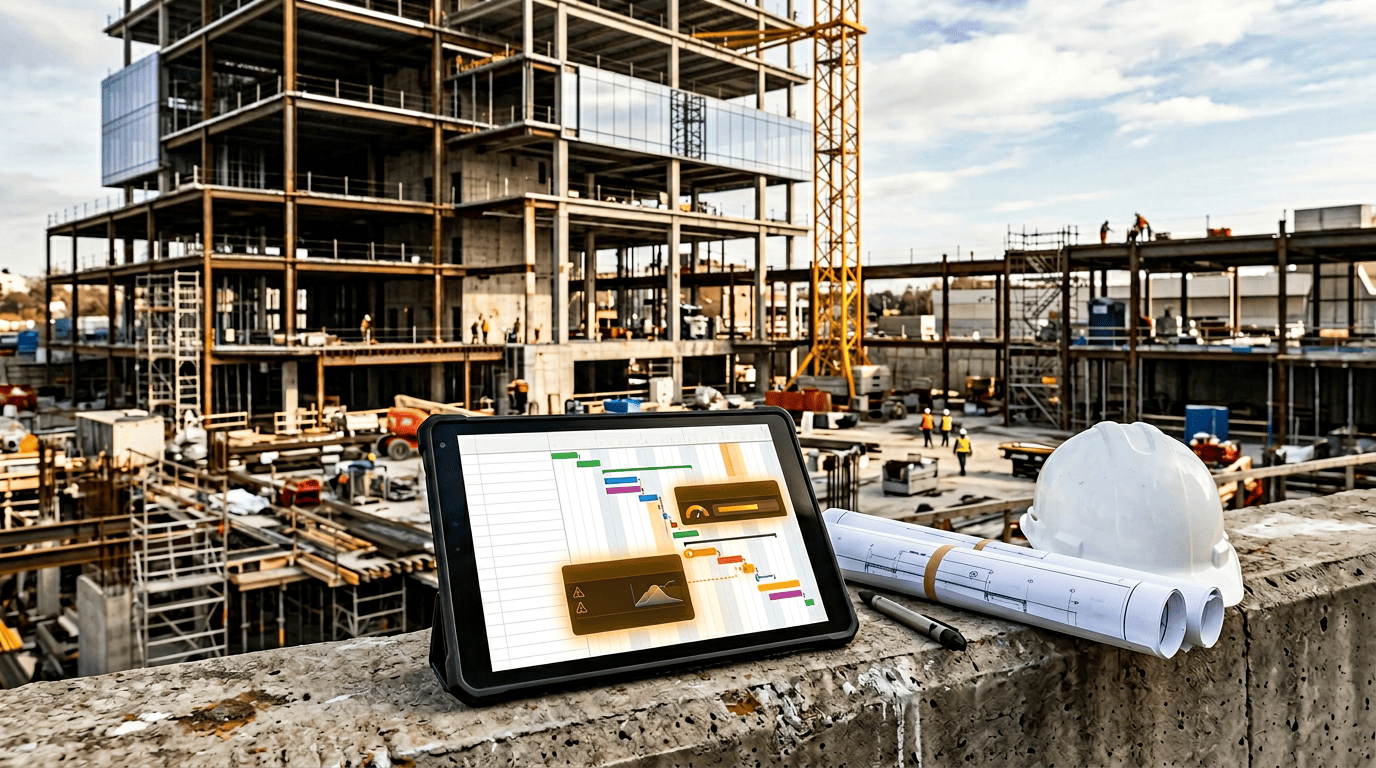
AI helps analyze project risks and optimize timelines by looking at historical projects, current schedules, contract terms, and constraints. It can flag where dates are overly optimistic, where dependencies are tight, and where changes or RFIs are likely to create bottlenecks.
Based on that, work schedules can be generated or adjusted automatically — with realistic milestones, resource allocation, and buffers that reflect how similar projects actually behaved in the past rather than purely idealized plans.
Delay prediction & early warnings
Machine learning models can predict potential delays by combining progress reports, weather data, supply delivery status, subcontractor performance, and change history. When risk levels increase for a particular activity or phase, project managers receive early warnings instead of discovering issues when it is too late to react.
This supports more proactive mitigation — resequencing tasks, adding resources where it makes sense, or adjusting scope — before delays cascade across the rest of the schedule.
Document analysis for constructability issues
Construction projects still rely heavily on drawings, specifications, and contracts. AI can read and analyze these documents to highlight potential conflicts, missing information, or inconsistencies that might cause rework later — for example, clashes between architectural and MEP plans or ambiguous scope language.
By surfacing these issues early, teams can resolve them during design and pre‑construction instead of on site, where changes are more expensive and disruptive.
Construction: safety monitoring & field visibility
Site condition monitoring
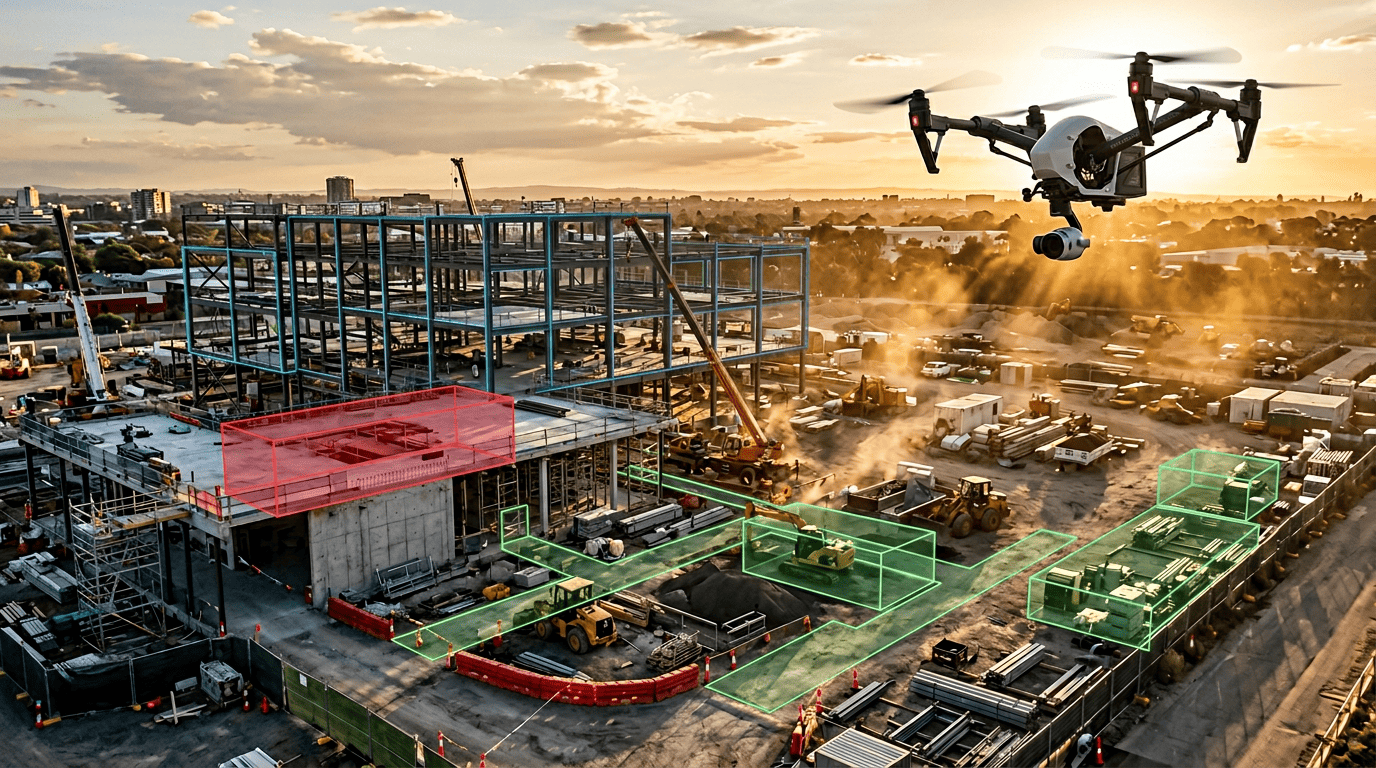
AI can continuously monitor the condition of construction sites using cameras, sensors, and reports. Computer vision models detect unsafe behaviors, missing PPE, blocked exits, or unauthorized access in real time — providing alerts that safety teams can act on quickly.
This complements existing safety inspections, giving teams a second set of digital eyes that are always on and can cover larger, more complex sites than any individual inspector.
Injury data analysis & prevention
Historical incident and near‑miss data often sits unused after reports are filed. AI can analyze this data to find patterns: which tasks, locations, contractors, or times of day are associated with higher risk, and what combinations of factors typically precede incidents.
With these insights, safety teams can prioritize training, targeted inspections, and preventive measures — and track whether interventions actually reduce repeat incidents over time.
Drones & hard‑to‑reach areas
Drones equipped with cameras can capture images and video of hard‑to‑reach areas such as roofs, facades, and tall structures. AI analyzes this imagery to identify potential hazards, structural issues, progress against plan, or deviations from design.
This reduces the need for risky manual inspections and scaffolding, while giving project managers and owners a clear, up‑to‑date view of site conditions from anywhere.
Real estate: market intelligence & asset valuation
Real estate market analysis
AI can predict prices based on historical transaction data, current listings, macro indicators, and local market trends. It helps estimate fair value for properties by comparing them with relevant comps and adjusting for key attributes such as size, condition, amenities, and location.
For investors and asset managers, this provides a more objective basis for acquisition and disposal decisions, underwriting, and negotiations with counterparties.
Property valuation & neighborhood attractiveness
Beyond basic price per square meter, AI can assess neighborhood attractiveness by combining data on transport links, schools, services, demographics, safety, and planned infrastructure. This adds context to property valuations and highlights areas that may be undervalued or poised for change.
Models can track how similar neighborhoods evolved in the past and project possible price paths for different scenarios, helping investors and developers position projects accordingly.
Price change forecasting
By analyzing historical price movements, rental yields, vacancy rates, and economic indicators, AI can forecast likely price changes for specific segments and geographies. These forecasts help portfolio managers and brokers decide when to buy, sell, or hold — and how to communicate expectations to clients.
For developers, price and demand forecasts inform decisions about unit mix, phasing, and marketing strategies long before projects hit the market.

Real estate: sales process & customer experience
Sales process optimization
AI can automate many parts of the real estate sales process, improving response times and consistency. Virtual assistants handle initial customer interactions, answer common questions, qualify leads, and route serious prospects to the right agent or team.
This keeps potential buyers and tenants engaged even outside office hours, while freeing sales teams to focus on high‑value conversations and closing deals.
Personalized offers & communication
Based on preferences, search behavior, budget, and previous interactions, AI can suggest properties that best match each client — from location and layout to amenities and financing options. Follow‑up emails and messages can be tailored to those preferences instead of generic blasts.
This increases the relevance of every touchpoint, shortens the search process for clients, and raises the likelihood that the right property is surfaced at the right moment.
Marketing performance & campaign analysis
AI analyzes marketing campaigns across channels — portals, social media, email, offline — to identify which creatives, messages, and channels drive qualified leads and conversions. Underperforming campaigns can be adjusted or paused, while budget is shifted toward the strategies that actually work.
Over time, this creates a feedback loop where every new launch, project, or listing benefits from the lessons of previous campaigns, instead of repeating the same trial‑and‑error patterns.

Ready to explore AI for construction & real estate?
Share your projects, portfolios, and goals — we'll help you identify where AI can add the most value across planning, safety, market analysis, and sales.
Talk to our team