AI for Agriculture
Modern agriculture is driven by data — drone and satellite imagery, soil sensors, weather feeds, machinery telemetry, and farm management systems. The challenge is not access to data, but turning it into everyday decisions that improve yield, reduce risk, and keep costs under control.
We help growers, agribusinesses, seed and input providers, and agri‑service companies use AI to monitor crop health, plan yields, optimize irrigation and nutrition, and automate harvesting and logistics. The goal is simple: more stable, predictable results from season to season with fewer surprises and less manual work.
Whether you manage thousands of hectares or specialized high‑value crops, we connect your existing tools and data into practical AI workflows — so agronomists, farm managers, and operators see clear, actionable insights instead of raw dashboards and spreadsheets.
Field intelligence
Use drone and satellite imagery plus sensor data to monitor crop health, detect stress early, and plan interventions with field‑level precision.
Water & nutrition
Predict irrigation needs, balance soil moisture, and tailor fertilizer programs to each zone so every hectare gets exactly what it needs — no more, no less.
Operations & logistics
Optimize harvesting windows, routes, and deliveries, and coordinate inputs and storage with fewer delays, losses, and last‑minute firefighting.
Crop health, yield forecasting & weather‑aware planning
Crop health monitoring
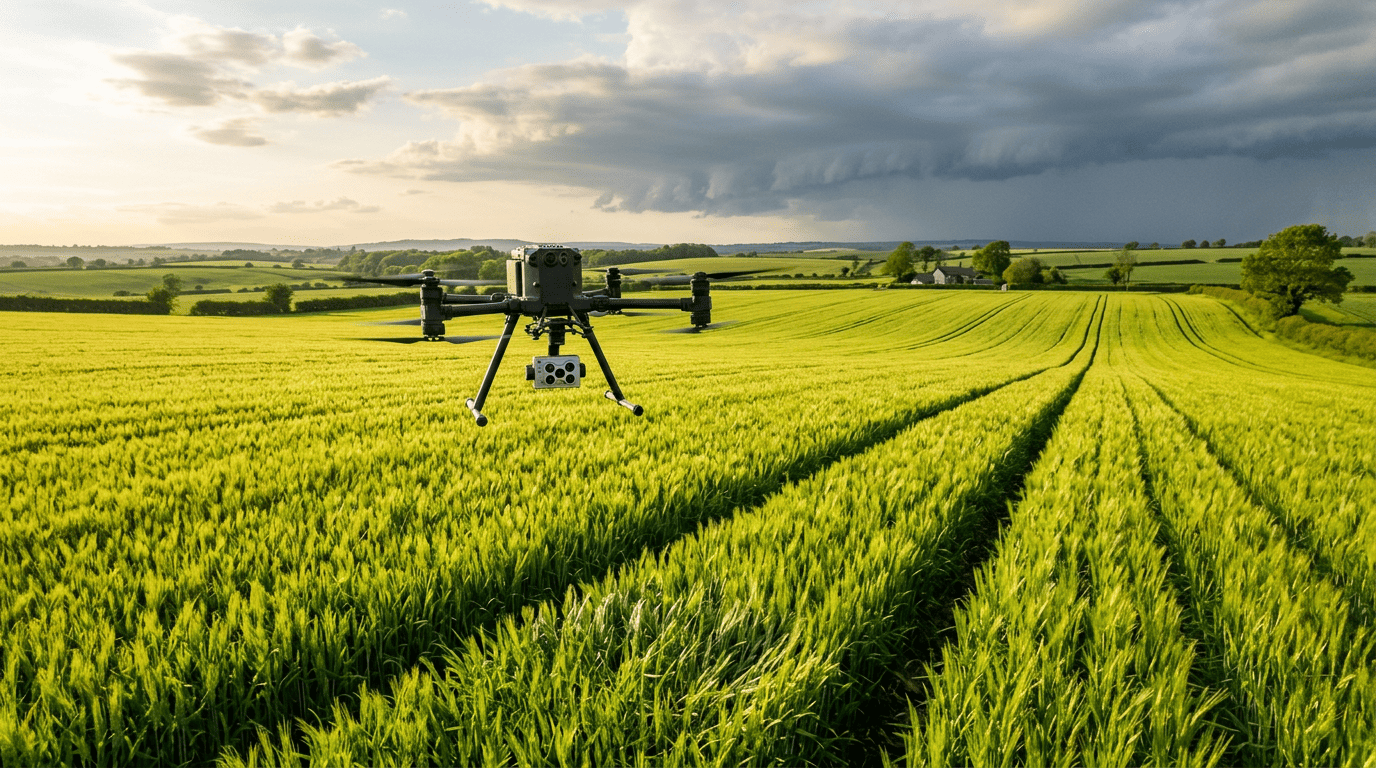
AI analyzes drone and satellite imagery together with field observations to assess crop health across every field and every growth stage. Vegetation indices, color changes, canopy density, and growth patterns all become signals for early stress detection.
Instead of driving blindly through all your fields, agronomists get clear maps that highlight zones with potential disease, pest damage, water stress, or nutrient deficiency. They can plan targeted field visits, confirm the cause, and act before problems spread.
Yield forecasting
Yield is shaped by weather, soil, genetics, and management decisions across the entire season. AI models combine historical yields, soil data, crop type, planting dates, weather history, and management practices to estimate likely outcomes for each field.
With these forecasts, you can better plan storage, sales, contracts, and financing. You see how different scenarios — for example, changing fertilizer strategy or irrigation intensity — might affect yield and margin, and can adjust your plan before it is too late.
Hyper‑local weather insight
Instead of generic regional forecasts, AI narrows weather predictions to the conditions that matter for your fields. Models learn from local weather stations, topography, and historical records to provide more accurate expectations of rainfall, temperature, wind, and frost risk.
This allows you to better time planting, spraying, irrigation, and harvest windows — reducing the risk of washed‑out treatments, equipment stuck in the field, or quality losses due to unexpected weather.
Smart irrigation, soil insights & plant nutrition
Irrigation optimization
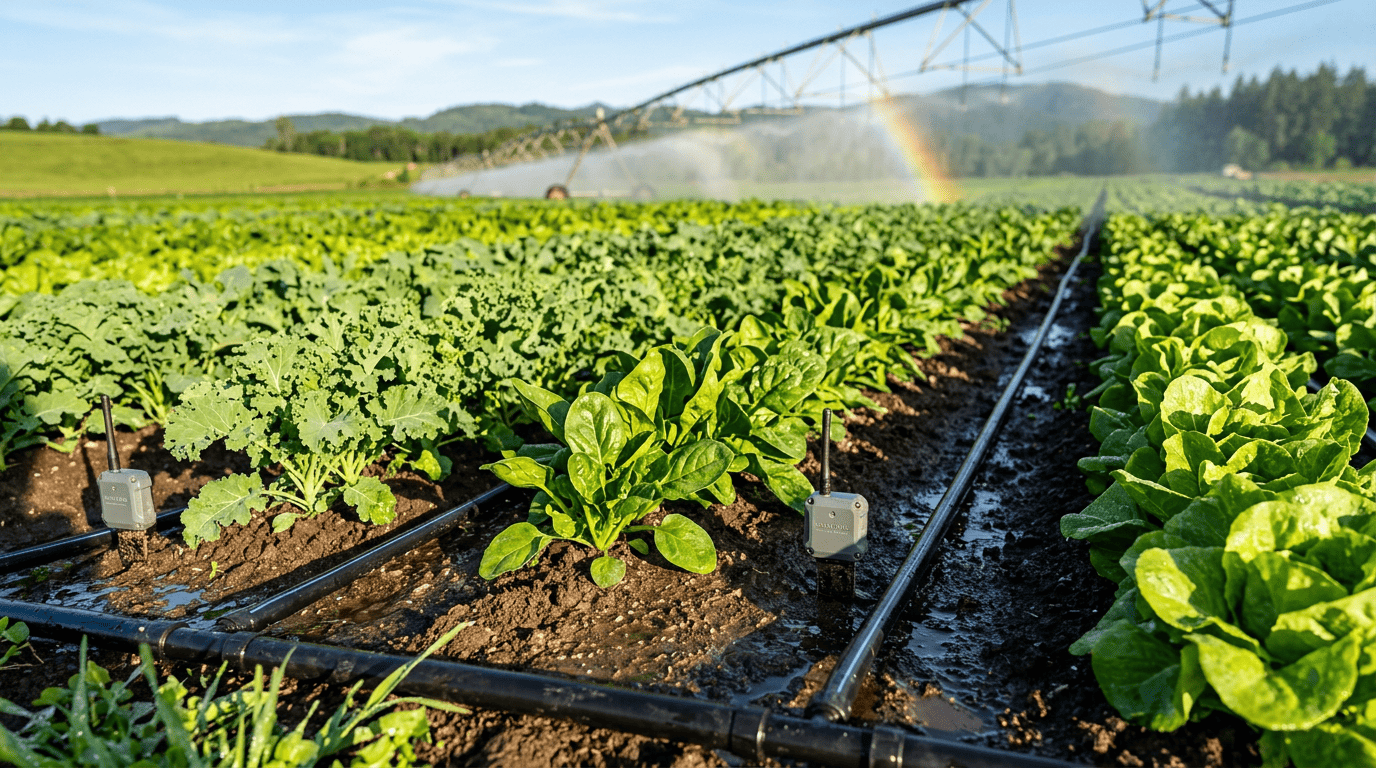
AI systems monitor soil moisture, evapotranspiration, and weather forecasts to predict water needs at the level of individual zones or pivots. They recommend when to start, how long to irrigate, and where to hold back.
The result is more consistent moisture in the root zone, reduced water and energy use, and fewer stress events for crops. Over time, models adapt to your soils, crops, and practices, getting better with every season.
Soil & plant nutrition management
Soil tests, tissue analysis, yield maps, and application history are often stored in separate systems or spreadsheets. AI brings them together to build a nutrition picture for every field and management zone.
Models recommend optimal fertilizer types, doses, and timings across the season, considering economic response curves and environmental constraints. Variable‑rate application maps help ensure each part of the field receives the right amount of nutrients — improving yield stability while avoiding overspending on inputs.
Crop protection, weeds & harvesting automation
Weed detection & targeted spraying
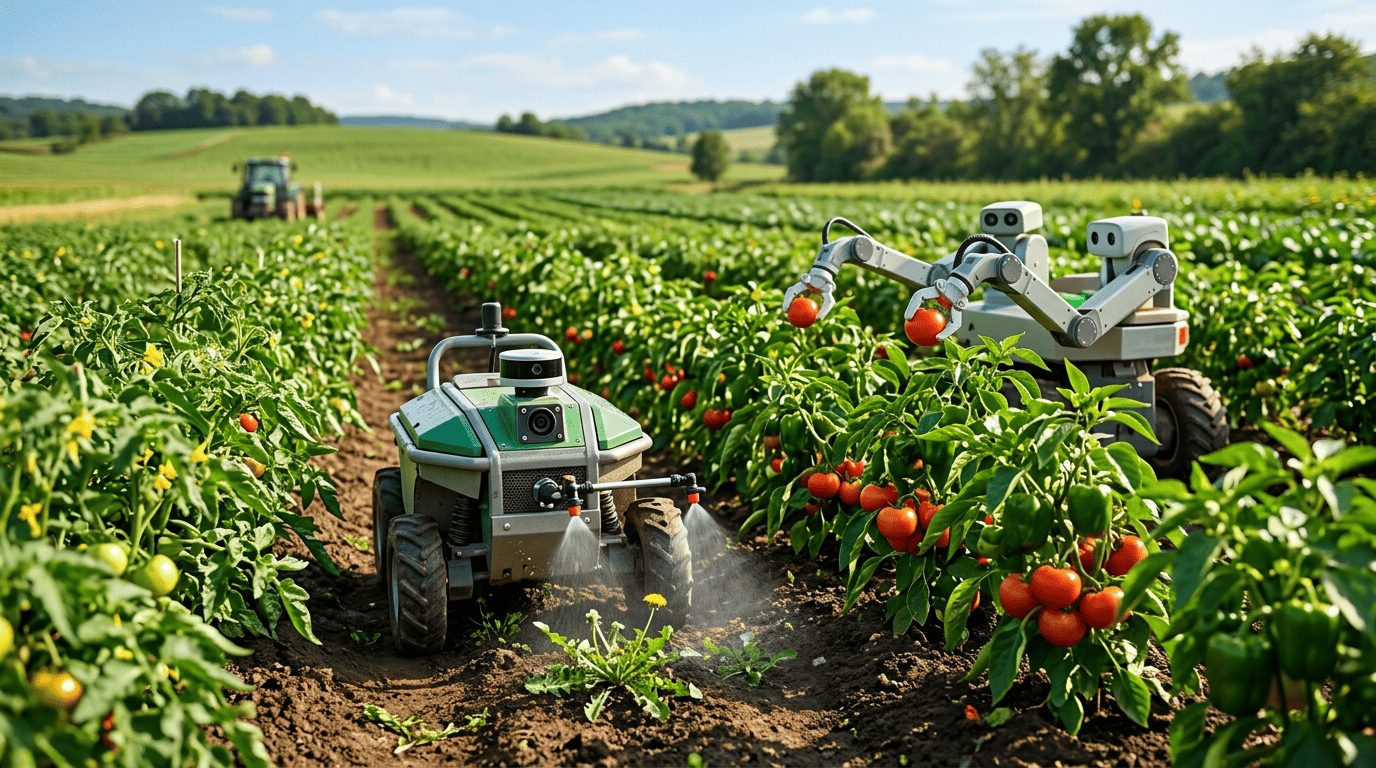
Using images from sprayer‑mounted cameras, drones, or robots, AI distinguishes weeds from crops in real time. It maps weed pressure across the field and supports spot‑spraying technologies that apply herbicides only where they are actually needed.
This reduces chemical use, lowers costs, and decreases environmental impact, while keeping fields cleaner and slowing the development of herbicide resistance by encouraging more precise and data‑driven programs.
Disease & pest risk alerts
Models that combine weather patterns, crop stage, variety, and historical outbreaks can estimate the likelihood of disease or pest pressure in specific fields. When risk crosses a threshold, agronomists receive alerts with suggested scouting priorities and timing.
This supports more strategic use of fungicides and insecticides — you can protect yield where it matters most, while cutting back on unnecessary sprays where risk is genuinely low.
Harvest timing & automation
For many crops, harvest timing is a balance between yield, quality, and weather risk. AI can use imagery and field data to estimate ripeness, dry matter, sugar content, or other quality indicators, helping you pick the optimal harvest window.
In orchards and specialty crops, AI‑enabled robots and smart harvesters can identify fruit, assess quality, and selectively pick or grade produce. This reduces reliance on scarce seasonal labor and creates a more consistent product for fresh markets and processors.
Livestock, on‑farm logistics & breeding programs
Livestock monitoring & welfare
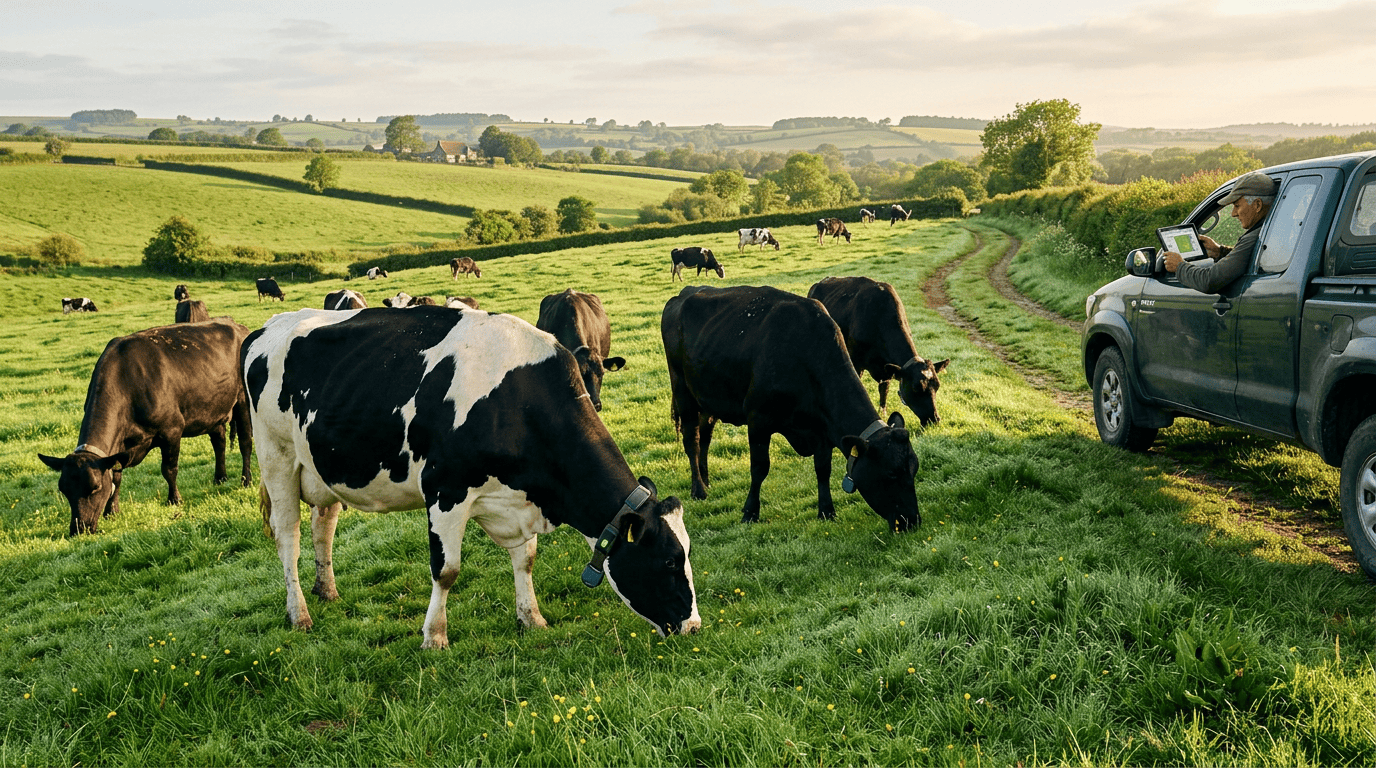
For mixed farms and livestock operations, AI analyzes data from sensors, cameras, and feeding systems to monitor animal health and behavior. Changes in movement, feeding patterns, or production indicators can trigger alerts long before visible symptoms appear.
This enables earlier veterinary intervention, more precise nutrition management, and better welfare outcomes — all of which contribute to productivity, product quality, and regulatory compliance.
On‑farm logistics & supply chain
Harvest logistics, input deliveries, and coordination with storage, dryers, and processors can create costly bottlenecks. AI optimizes routes for trucks and harvesters, schedules operations based on field conditions and capacity, and helps coordinate deliveries to avoid queues and downtime.
For larger agribusinesses, the same models extend across the supply chain — linking farms, elevators, and processing plants so that grain, produce, and livestock move through the system with fewer delays and losses.
Breeding & new varieties
Seed producers and breeders can use AI to analyze genetic data, trial results, and environmental responses to identify promising lines faster. Models highlight combinations of traits associated with yield, quality, and stress tolerance under different conditions.
This accelerates the development of new, climate‑resilient varieties and hybrids, reduces the number of field trials needed, and makes breeding programs more data‑driven and predictable.
Ready to explore AI for agriculture?
Share your crops, regions, and challenges — we will help you identify where AI can add the most value across your fields, livestock, and supply chain.
Talk to our team