AI for Automotive
From autonomous driving and safety systems to production quality, design optimization, and fleet management, AI is transforming how vehicles are developed, built, and operated.
Driving & safety
Autonomous driving
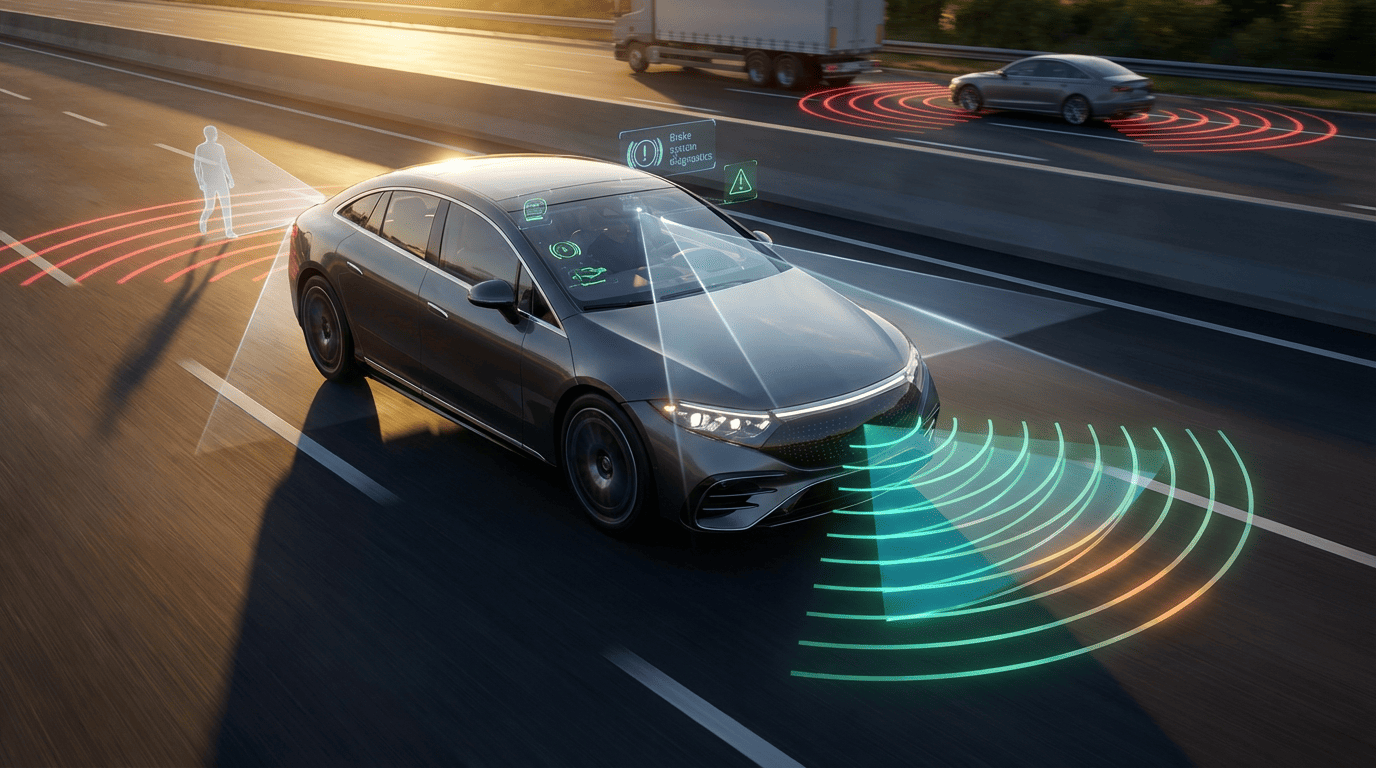
AI builds autopilot stacks that sense traffic and act in real time, fusing camera, radar, lidar, and other inputs to spot lanes, vehicles, pedestrians, and obstacles and plan safe paths.
OEMs and suppliers move faster from ADAS toward higher autonomy with clearer coverage of edge cases; drivers get fewer incidents and more dependable assistance.
Failure prediction
From onboard sensors, AI forecasts failures before they cause breakdowns or incidents by tracking vibration, temperature, fluids, and fault codes for early wear and anomalies.
Manufacturers, fleets, and dealers shift from reactive repairs to predictive maintenance—service when it matters, less downtime, higher satisfaction.
Intelligent safety systems & test analysis
AI strengthens ADAS such as automatic emergency braking, adaptive cruise, and lane keeping, improving detection and intervention as models learn from large-scale driving data.
It also speeds crash-test and simulation review: engineers receive ranked insights on where to reinforce designs instead of manually combing every run.
Production & design
Improving production quality
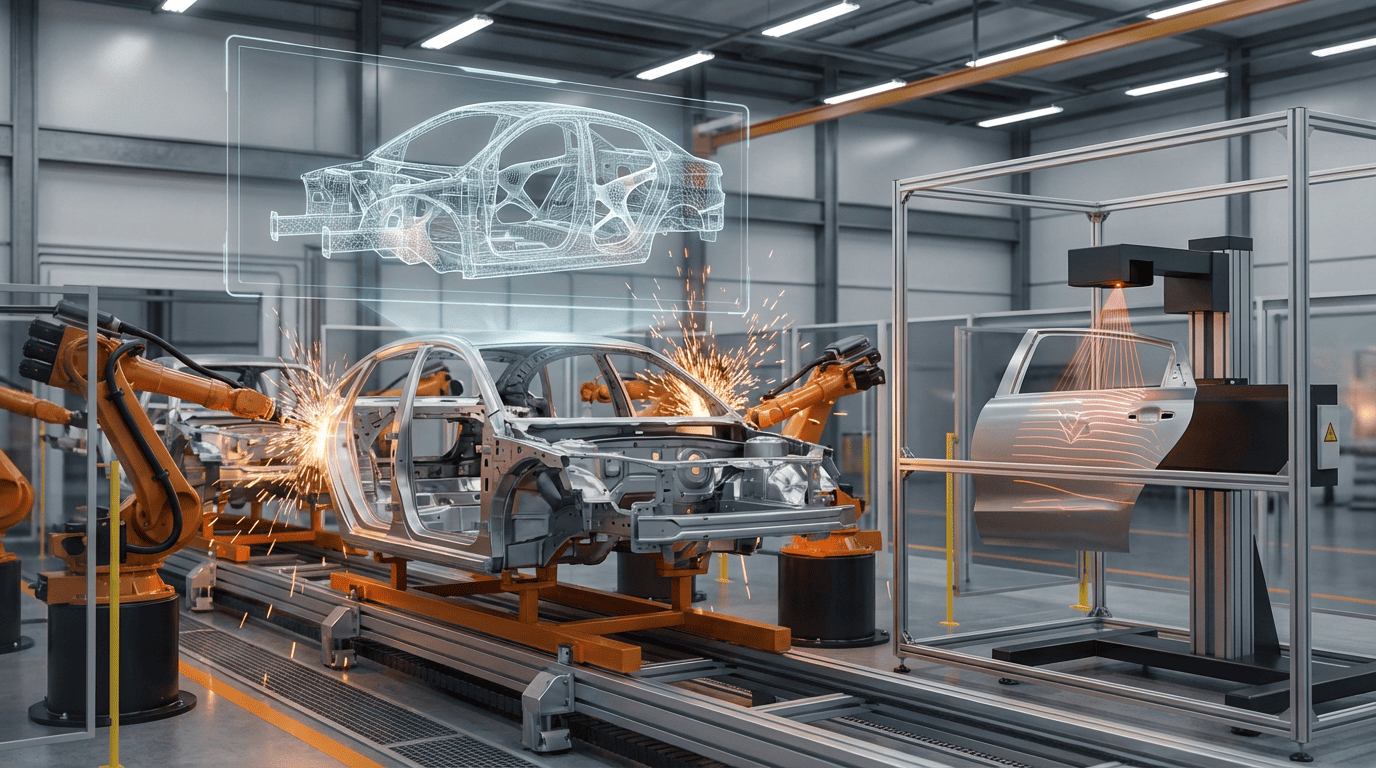
AI helps identify defects on the assembly line by continuously inspecting parts and processes. Computer vision systems detect surface defects, misalignments, and assembly errors in real time, while analytics tools track process stability across shifts, plants, and suppliers.
This lets manufacturers catch issues earlier, reduce scrap and rework, and standardize quality across global plants. Over time, models learn which process changes have the biggest impact on yield and can recommend targeted improvements.
Design optimization
AI accelerates the design process by analyzing millions of engineering decisions and simulations, then highlighting the best options. Generative design algorithms can propose structures that meet weight, strength, and cost constraints while exploring shapes that would be hard for humans to imagine on their own.
Engineers remain in control, selecting and refining candidate designs, but with far more ideas to choose from and clear trade‑offs between performance, manufacturability, and sustainability.
In-car experience
Smart interfaces in cars
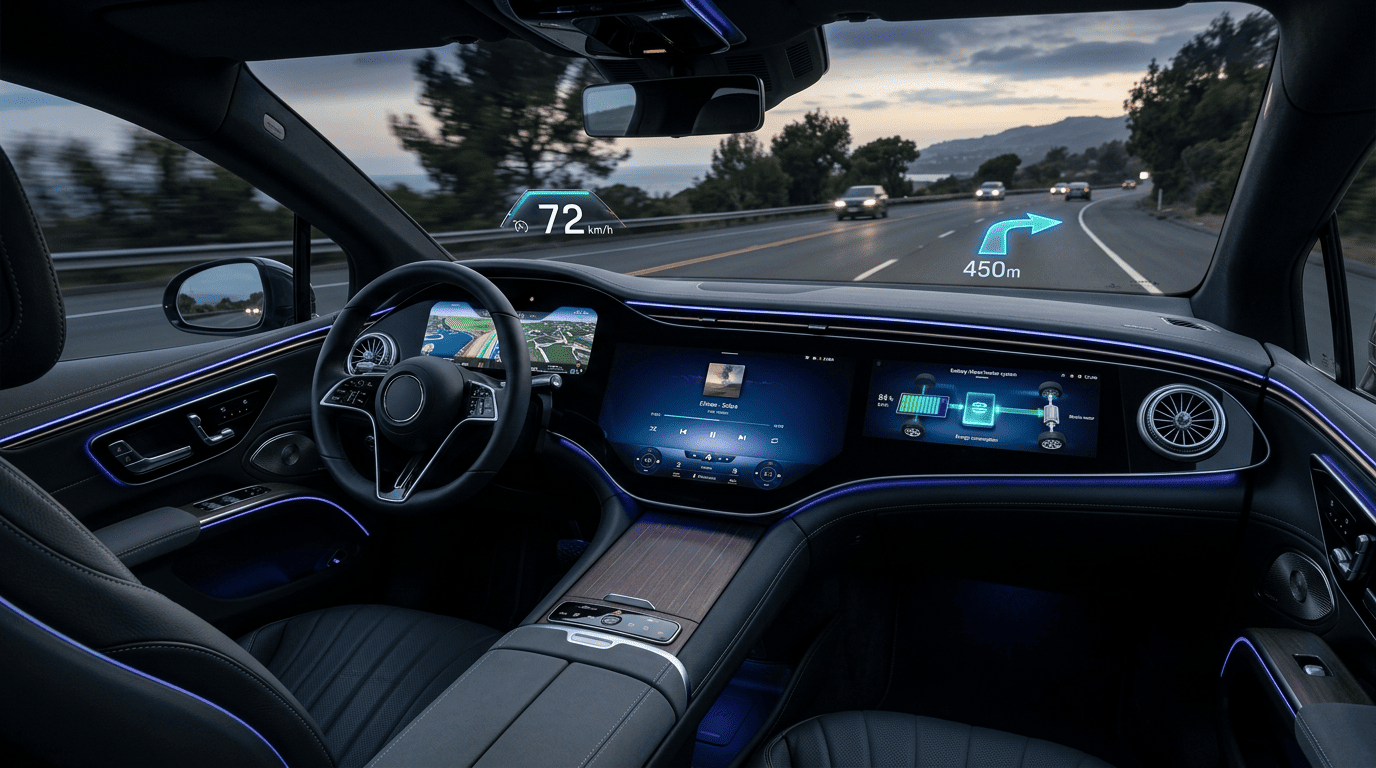
AI enables natural voice control, facial recognition, and gesture‑based interfaces that make interacting with the vehicle more intuitive and safer. Drivers can control navigation, media, and climate without taking their eyes off the road, while personalization features adapt seat, mirror, and infotainment preferences automatically.
Over‑the‑air updates allow OEMs to continuously improve these experiences, rolling out new capabilities without requiring a visit to the dealership.
Energy efficiency
AI helps develop power management systems in hybrid and electric vehicles, extending battery life and range. Models learn from driving style, route profile, temperature, and charging habits to optimize how energy is used and recovered.
For fleets and individual drivers, this means fewer charging stops, longer battery lifetime, and better alignment between vehicle performance and real‑world usage.
Operations & supply chain
Supply chain optimization
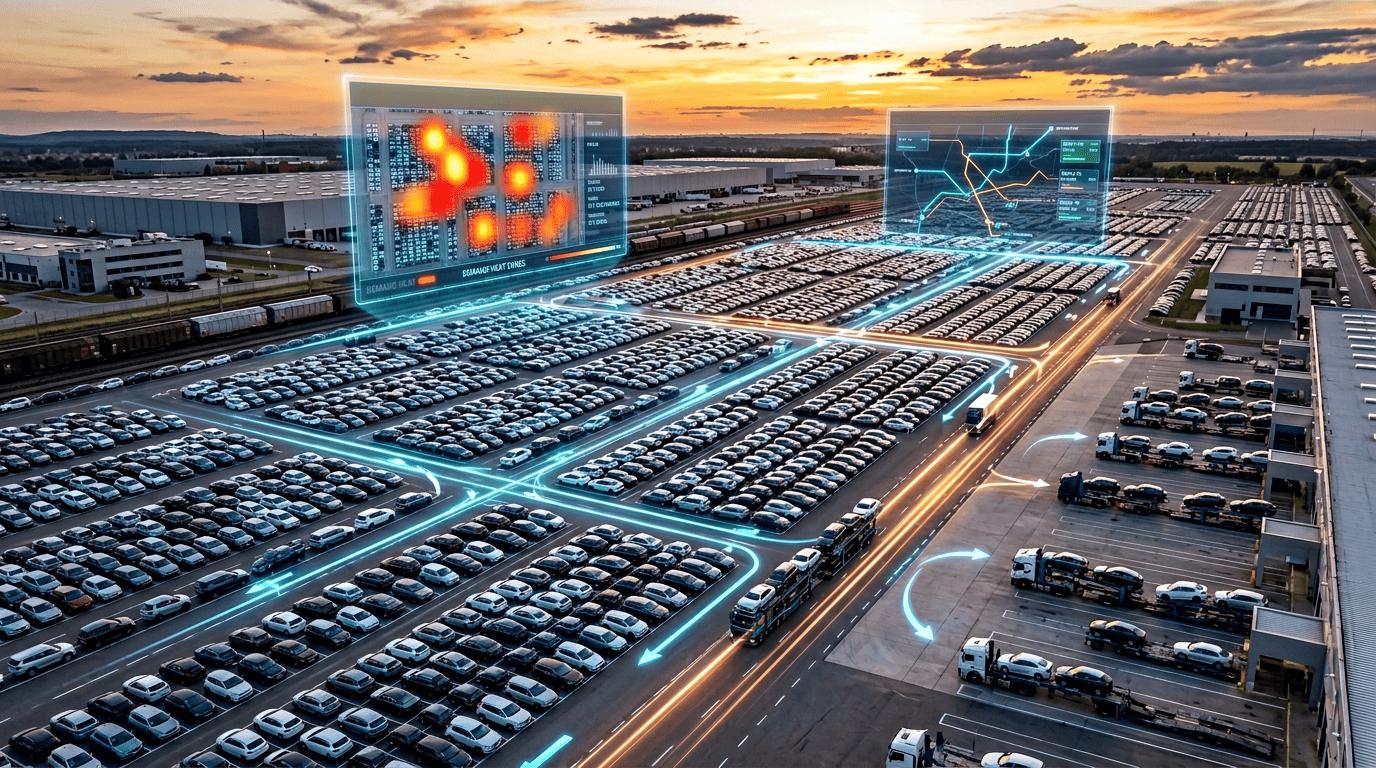
AI is used to forecast parts and materials demand, manage logistics, and reduce delays. It takes into account production plans, market demand, supplier performance, and external risk factors to recommend optimal ordering and inventory strategies.
This reduces stockouts and excess inventory, shortens lead times, and gives supply chain teams early warning when disruptions are likely, so they can switch suppliers or adjust schedules.
Fleet management
For car‑sharing providers, rental companies, and logistics fleets, AI helps optimize routes, monitor vehicle condition, and predict demand by time and location. Dispatch and maintenance decisions become data‑driven rather than ad‑hoc.
The result is higher utilization, lower operating costs, and better service levels for end‑customers who expect vehicles to be available exactly when and where they need them.
Ready to explore AI for automotive?
Share your focus — R&D, production, safety, or operations — and we'll help you identify where AI can add the most value.
Talk to our team