AI for Education & Corporate Training
AI improves learning efficiency by personalizing educational experiences and automating training processes. Instead of one static curriculum for everyone, learners receive content, support, and feedback that match their level, pace, and goals.
We help schools, universities, EdTech platforms, and corporate L&D teams use AI to build adaptive courses, virtual tutors, automated assessment systems, and learning analytics that give real insight into what works — and where learners are getting stuck.
Whether you are running degree programs, internal academies, onboarding tracks, or continuous upskilling at scale, AI can take over repetitive tasks for educators and trainers while giving learners more responsive, human‑like support.
Personalized educational platforms & adaptive learning
Adaptive courses tailored to each learner
AI enables the creation of personalized educational platforms that adapt to students' knowledge levels, interests, and learning styles. Courses no longer move everyone through the same content at the same speed — instead, they adjust based on how each learner performs.
The system can automatically suggest additional study materials, explanations, and practice tasks when tests or quizzes reveal gaps, while allowing advanced learners to move faster through material they already understand.
Real‑time difficulty adjustment
Adaptive learning platforms use AI to analyze student progress and automatically adjust course difficulty and materials. If a learner struggles with a concept, the platform can slow down, provide alternative explanations, or introduce bridging topics.
For corporate training, this means employees see content that matches their current skill level and role, which keeps them engaged and reduces time wasted on material that is either too basic or too advanced.

Virtual tutors, learning assistants & automated assessment
Virtual tutors powered by AI
Using GPT‑class models for learning allows you to create interactive virtual tutors that answer students' questions, walk them through problem‑solving steps, and explain complex topics in clear language. This can significantly increase engagement and motivation, especially when human support is limited.
These AI‑powered learning assistants can be embedded directly into LMS platforms, course portals, or internal knowledge bases, staying available 24/7 to help learners when they actually need support.
AI‑powered learning assistants
Beyond answering questions, AI assistants can guide learners through educational content, recommend the next lesson, summarize previous sessions, and help set goals. For managers and L&D leads, they provide structured updates on learner progress without manual tracking.
Automated assessment systems
AI can evaluate assignments, tests, and even essays, reducing the workload on teachers and trainers. Objective questions can be graded instantly, while open‑ended responses can be scored according to rubrics and flagged for human review where necessary.
In corporate environments, this makes it easier to run frequent assessments, certification programs, and knowledge checks without overwhelming instructors — while still maintaining quality and fairness.

Performance analysis & learning analytics
Insight into progress and problem areas
AI can analyze student performance data — quiz scores, completion rates, time on task, interaction patterns — identifying trends and problem areas. Educators see which concepts are consistently difficult and which learners are silently falling behind.
This helps teachers and trainers adapt their teaching methods and tailor their approach to each student or cohort, rather than relying on intuition or occasional manual reviews.
Learning analytics & course improvement
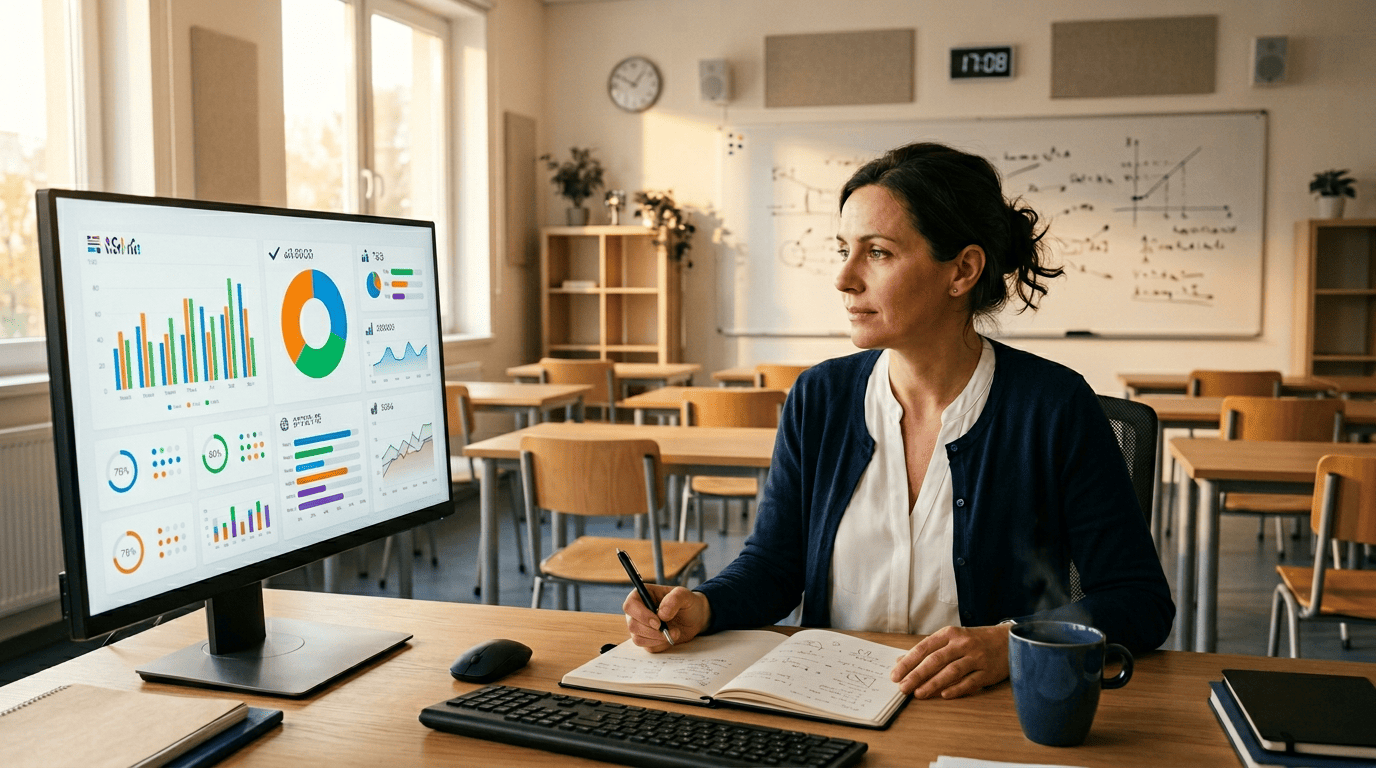
Learning analytics tools use AI to aggregate and interpret data across courses and cohorts. They highlight which modules drive the best outcomes, where drop‑offs occur, and how changes to content or delivery affect performance.
These insights allow instructional designers and L&D teams to improve course design continuously and measure training effectiveness in a way that ties back to business or academic goals.
Corporate training: skills, simulations & workforce impact
Skills gap analysis for companies
AI analyzes employee performance data, assessments, and activity in business systems to identify skill gaps at both individual and team levels. It can map current capabilities against role profiles and future needs, showing where the organization is exposed.
Based on this, the system recommends personalized training programs and learning paths — for example, which courses, projects, or practice tasks would most efficiently close a particular skill gap for a given employee or group.
Simulation‑based training
AI enables realistic, simulation‑based training environments for industries such as aviation, healthcare, engineering, and emergency response. Learners can practice decision‑making in complex scenarios that would be too risky, costly, or rare to recreate in real life.
Simulations can adapt in real time to learner actions, presenting new challenges and capturing detailed performance data that feeds back into coaching and certification decisions.
Measuring impact on performance
By linking learning data with business KPIs — productivity, quality, sales, safety — AI can show how training affects real‑world performance. This moves L&D discussions from “course completions” to measurable outcomes.
Leaders get a clearer view of which programs drive meaningful change and which need to be redesigned, helping justify investment in learning and focus on initiatives with the highest impact.

Ready to explore AI for education & corporate training?
Share your programs, audience, and goals — we'll help you design AI‑powered learning experiences that scale personalization, automate routine work, and make training measurable.
Talk to our team