AI for Healthcare & Life Sciences
From drug discovery and device demand planning to diagnostics, hospital workflows, and telemedicine, AI helps healthcare organizations improve outcomes, lower costs, and expand access to care.
Pharma & life sciences
Drug discovery & development
We use AI to help develop new drugs by analyzing data on molecules and their interactions. Machine learning models predict the effectiveness and safety profile of new compounds before they reach the lab, significantly reducing research time and costs.
This lets R&D teams narrow down large libraries of candidates to a smaller set of high‑potential options, focus lab resources where they matter most, and make more informed go/no‑go decisions throughout the pipeline.
AI can also support clinical trial design and patient recruitment by identifying suitable cohorts, predicting enrollment risks, and monitoring safety signals as data accumulates. That means fewer failed trials and faster time‑to‑market for therapies that work.
Medical device manufacturers
Forecasting demand for medical devices helps optimize inventory and reduce costs. AI systems analyze consumption data, seasonal fluctuations, procedure volumes, and macro trends to predict where and when devices will be needed.
With better forecasts, manufacturers and distributors can reduce stockouts in hospitals and clinics, minimize expired inventory, and align production plans with real‑world care delivery.
In parallel, AI can power predictive maintenance and remote monitoring for connected devices in the field, helping manufacturers offer uptime‑focused service contracts and build new recurring revenue streams.

Hospitals & health systems
Diagnostics & clinical decision support
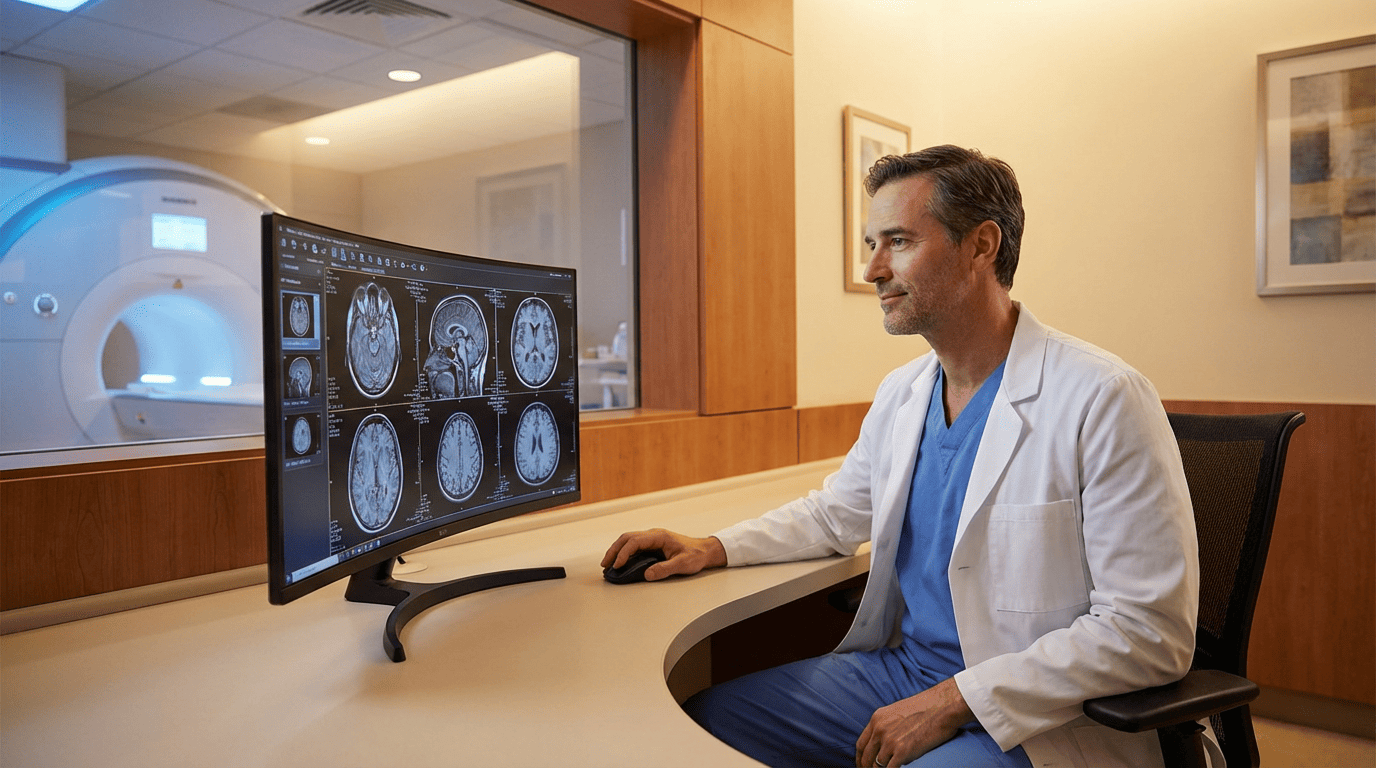
AI is used for disease diagnosis, including computer vision analysis of medical images. Systems can process images and identify pathologies with high accuracy, helping doctors make more informed decisions and prioritize cases that require urgent attention.
Beyond imaging, AI can analyze lab results, vitals, and historical records to highlight risk factors, recommend next‑best diagnostic steps, and surface treatment options aligned with clinical guidelines.
Operations, capacity & quality of care
AI supports triage, length‑of‑stay prediction, bed and staff allocation, and readmission risk. S&C also has experience developing solutions such as Electronic Health Records and Electronic Medical Records that embed AI to assist clinicians directly in their workflow.
For hospital leaders, this translates into better capacity utilization, fewer bottlenecks in emergency and inpatient flow, and clearer visibility into where delays and inefficiencies are hurting both patient outcomes and financial performance.
Telemedicine, remote care & patient experience
Telemedicine & remote monitoring
Consultations with doctors via AI‑supported systems can improve access to medical care, especially in remote areas. AI can assist with initial symptom analysis, prioritizing which patients should see a doctor first, and providing recommendations for further action or self‑care.
For chronic conditions, AI‑driven monitoring and risk scores can highlight which patients need outreach from care teams right now, shifting the focus from reactive care to proactive, preventative interventions.
Patient journeys & care pathways
AI helps orchestrate patient journeys across channels and departments: from appointment scheduling and reminders to preparation instructions, follow‑up plans, and adherence nudges. Communication becomes more timely and personalized, reducing no‑shows and improving adherence to treatment.
This closes gaps between outpatient, inpatient, and home‑based care, giving patients a more continuous and supportive experience throughout their treatment.

Ready to explore AI for healthcare?
Share your focus — pharma, devices, hospitals, or telemedicine — and we'll help you identify where AI can add the most value.
Talk to our team